Everyone who has played CS2 for at least a month has held a finger over the "Open Case" button at some point. An entire industry is built on that second of hesitation. The good news: the drop probabilities have long been known exactly, so you can calculate the real price of any dream — up to and including a knife. The bad news: after doing the math, you will usually not want to open cases anymore. Let's go through the numbers honestly, without any "my friend unboxed one on his third case."
Official Odds by Rarity
The odds are identical for all standard weapon cases and do not depend on how many cases you have opened or how "warmed up" your account is. Every opening is an independent event:
| Rarity | Color | Odds |
|---|---|---|
| Mil-Spec | Blue | 79.92% |
| Restricted | Purple | 15.98% |
| Classified | Pink | 3.2% |
| Covert | Red | 0.64% |
| Exceedingly rare item (knife/gloves) | Gold | 0.26% |
Within each tier there is an additional StatTrak roll — with a 10% chance. So a StatTrak knife is 0.26% × 10% = 0.026%, one opening out of four thousand.
Note that the percentages describe rarity, not a specific price. Within each tier the skins roll with equal probability, but their values differ — a red drop from one case can sell for $400 while one from another barely reaches $15. That is why experienced players first look at the full contents of a case and calculate the weighted average drop value, and only then decide whether a particular case is worth it at all. In most cases the average drop value is two to three times below the cost of opening.
A key detail of the economy: the case itself is only half the expense. Every opening requires a key at $2.49, and keys are not sold on the community market — only directly from Valve. Even if a case drops to you for free after a match, opening it is never free.
What Unboxing a Knife Actually Costs
The gold drop chance is 0.26%, which means a knife arrives on average once every 1 / 0.0026 ≈ 385 cases. Let's budget it at a case price of about $1:
| Expense | Calculation | Amount |
|---|---|---|
| Cases | 385 × $1.00 | $385 |
| Keys | 385 × $2.49 | $959 |
| Average total | 385 × $3.49 | about $1344 |
Bottom line: the expected cost of the road to a knife is $1350 and up, and that is with a cheap case. With $2–5 cases the budget easily passes $2000. And crucially, "on average" does not mean "guaranteed": the distribution is geometric, and one in four knife hunters will not see gold even after 500 cases.
Now compare that with buying directly. Here is what one of the most coveted knives in the game costs right now:
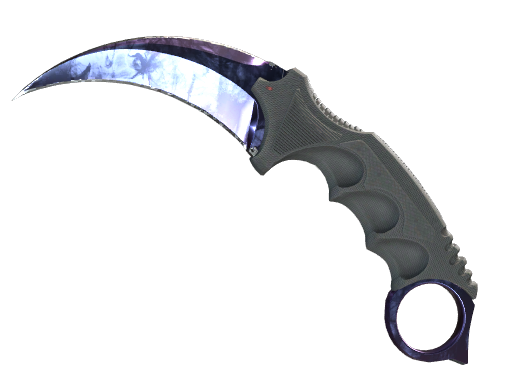
Even a top-tier Karambit Doppler in Factory New usually costs less than the expected cost of hunting a random knife. And a random knife is most often not a Karambit but a Battle-Scarred Gut Knife worth $80–120. When you buy directly, you choose the exact model, finish and float. When you open a case, you get a lottery ticket and pay for every single attempt.
If your budget is limited, check the live selection of the most affordable knives — many cost less than a hundred openings:
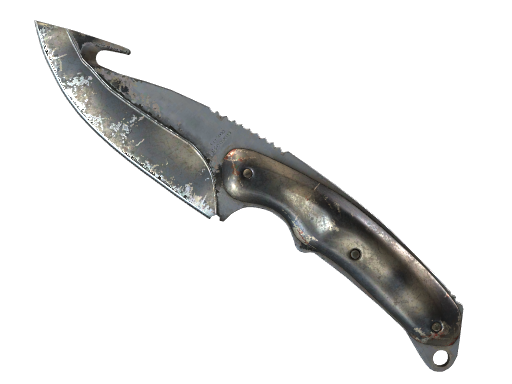
Gut Knife | Scorched
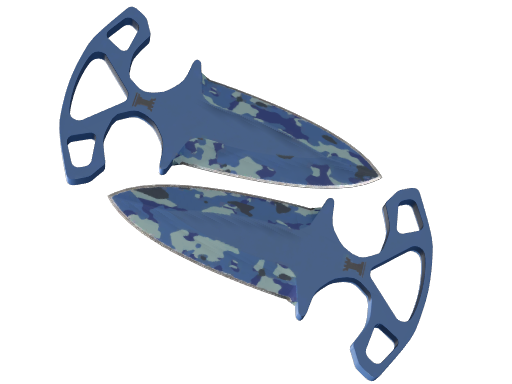
Shadow Daggers | Bright Water
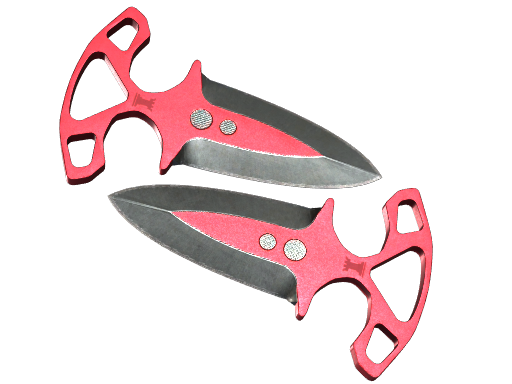
Shadow Daggers | Autotronic
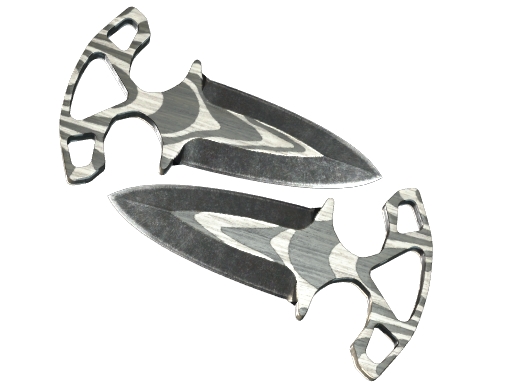
Shadow Daggers | Black Laminate
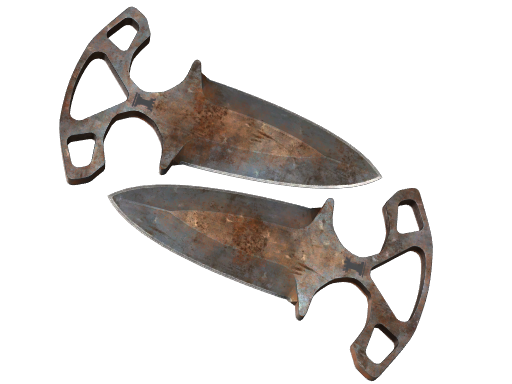
Shadow Daggers | Rust Coat
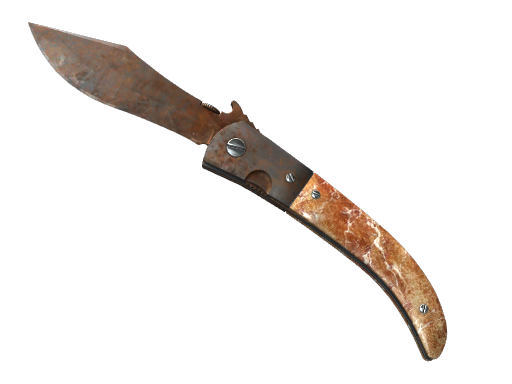
Navaja Knife | Rust Coat
For a detailed breakdown of budget options, see best knives under $200.
Why People Open Cases Anyway: Loot Box Psychology
The case mechanic uses classic gambling techniques:
- Variable reinforcement. The reward is unpredictable, and the brain responds to the anticipation more strongly than to the result — the same scheme as slot machines.
- Near misses. The roulette "just barely" stopped short of the red skin. In reality the animation decides nothing — the outcome is determined the moment you open — but the feeling of "almost lucky" nudges you to open one more.
- Sunk cost fallacy. "I've already opened 50 cases, the knife must be close." It is not: the next case's chance is still 0.26%; randomness has no memory.
- Survivorship bias. Streams and clips show only the wins. Thousands of blue drops never make it into the highlight reels.
Understanding these mechanisms does not make you immune, but it helps you close the case window in time.
When Opening Cases Actually Makes Sense
Being honest means admitting cases have legitimate use cases:
- Collecting the cases themselves. Cases removed from the drop pool appreciate for years — sealed, without any openings.
- Content and emotions. A case opening stream is entertainment with a clear price tag. If you treat $35 for ten openings as the price of a show rather than an investment, that is fine.
- Rare price spikes on fresh drops. Right after a new case releases, the new skins are at their most expensive, and early drops sometimes pay for a run of openings. That window closes in days, not weeks.
The only thing that does not work is opening cases "to make money." The expected value is negative by construction — otherwise Valve would not be earning billions from this mechanic.
The Rational Alternative: Buy the Drop, Not the Ticket
Everything that drops from cases is sold on marketplaces — as a rule, far below the "price per attempt." Our service compares prices on Skinport, Lis-Skins and Market.CSGO with a 30-minute refresh; we hold neither money nor skins — we only show you where the item you want is cheapest. Start with the knife catalog: sort by price and see for yourself that a "case knife," measured by the average number of attempts, is the worst deal on the market.
If you are drawn to mechanics with controlled risk, look at trade-up contracts: the odds there are also computable in advance, but the "ticket" costs a few dollars, not a thousand. And if you are building your first inventory, our inventory for $100 plan covers every weapon slot for the price of thirty openings.
Cases are not an investment and not a path to a knife. They are a paid show with a known ticket price. Look at the numbers before you buy the key.