Stickers are the layer of the CS2 economy most underrated by newcomers. A piece of virtual paper can cost more than a knife, and a properly stickered AK-47 can cost more than an entire inventory. Yet the pricing logic here is its own thing and counterintuitive at first glance: a $1000 sticker adds nowhere near $1000 to a skin's price. Let's break down how this market works and what the "crafts" traders keep talking about actually are.
Sticker Types: From Paper to Gold
Stickers differ by finish, and the finish is the first price multiplier:
| Type | Appearance | Relative rarity | Price range |
|---|---|---|---|
| Regular (Paper) | Matte image | Baseline | from cents |
| Glitter | Sparkles across the sticker | Above baseline | cents to dollars |
| Holographic (Holo) | Rainbow shimmer at an angle | Rare | dollars to hundreds |
| Foil | Metallic sheen | Rare | dollars to hundreds |
| Gold | Gold embossing | Rarest in a capsule | tens to thousands |
A separate universe is tournament stickers: team logos and player signatures released for every Major. Their supply is limited by the tournament window: capsules are sold for a few weeks, then production stops forever. That limited supply is exactly what turns some tournament stickers into collectible assets.
Why Katowice 2014 Is Legendary
The EMS One Katowice 2014 stickers were the first tournament release with team logos in the game's history. Back then almost nobody bought them: the game was younger, the market tiny, and stickers looked like useless cosmetics. Most capsules were opened immediately, the stickers applied to cheap skins or simply forgotten. A decade later, the surviving copies have become grails:
- iBUYPOWER Holo and Titan Holo are the most expensive stickers in the game: tens of thousands of dollars apiece.
- Even the regular paper Katowice 2014 stickers cost hundreds and thousands.
- A skin carrying such a sticker automatically becomes a collector's item.
The formula is simple: finite supply (capsules are never reissued, and stickers are destroyed when removed) plus growing demand (the CS2 audience has multiplied) equals years of price growth. The same mechanism works at a smaller scale for Katowice 2015, Cologne 2014–2016 and other old Majors.
Scraping: Why a Scratched Sticker Is Worth Less
A sticker on a skin can be scraped — each pass erases part of the image until the sticker disappears entirely. There is no undo. This gives the market two iron rules:
- A skin with a partially scraped expensive sticker loses most of that sticker's premium. A "90% scraped iBUYPOWER" is no longer a grail — it is a curiosity.
- Fully untouched stickers on old skins carry an extra premium: they prove that owners deliberately preserved the craft for years.
Sometimes scraping is used intentionally — wearing a sticker down to a specific layer for an unusual look. But those are niche experiments: the default rule is to keep the scraper away from expensive stickers.
What a Craft Is
A craft is a skin with its sticker slots filled as a single composition: 4 stickers, or 5 on the AK-47 and a number of other models. Traders reserve the word for deliberate combinations: four identical holo stickers, a player's signature on "his" weapon, color harmony between stickers and skin.
The craft status hierarchy:
- 4x identical Katowice 2014 Holo — the summit. The legendary example: an AK-47 with four iBUYPOWER Holos; such crafts are valued at tens of thousands of dollars and are known individually.
- 4x identical old holos/foils — Katowice 2015, Cologne 2014–2016.
- Theme crafts — signatures of a full team roster, sticker colors matched to the skin's finish.
- Budget crafts — recent tournament stickers for pennies, pure aesthetics with no collectible value.
There are exceptions in both directions: iconic combinations (that same iBUYPOWER Holo quad on a fitting skin) sell at a premium above the stickers' face value, while a chaotic set of random stickers adds almost nothing.
Sticker Positions Have a Price Too
Weapon slots are not equal. On the AWP the position above the scope is prized; on rifles, the slots visible in first person and not covered by the character's hands. One expensive sticker on the "right" position often adds more value than the same sticker on a hidden slot. Before buying a stickered skin, always check the inspect view: where exactly the sticker sits, whether it has been scraped, and whether the finish's own pattern obscures it. Sellers love photographing a craft from its most flattering angle — the in-game inspect shows the real picture.
A Base for Your Craft: Where to Start
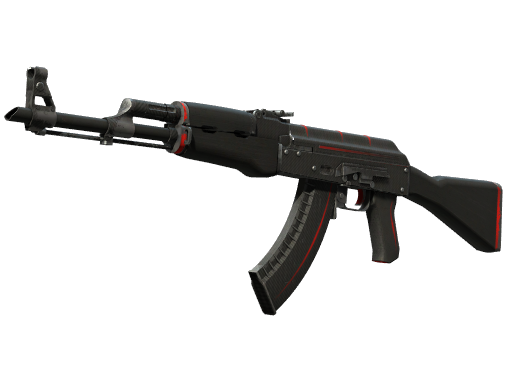
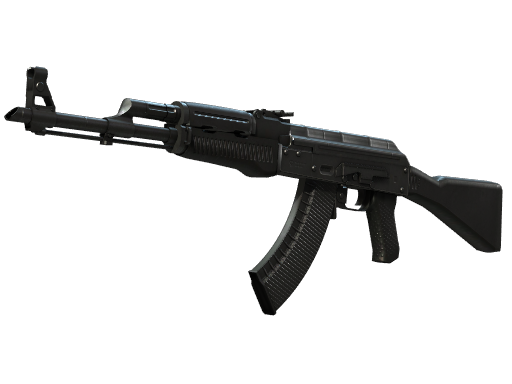
The classic choice for crafts is inexpensive "clean" skins on which stickers read well. Dark matte finishes like the AK-47 Slate are a popular base: they do not fight the stickers and are cheap in Factory New:
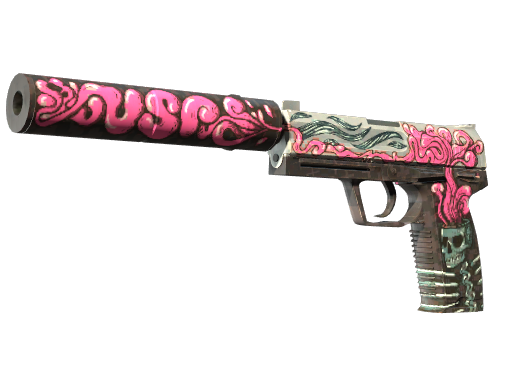
For individual player signatures, pistols are a frequent pick — for example the USP-S Cortex, whose light body shows off holo stickers nicely. Its prices across marketplaces:
We compare prices on Skinport, Lis-Skins and Market.CSGO with a 30-minute refresh and hold neither money nor skins — read how the aggregator works in how reSkins works.
Practical Takeaways
- Stickers are a separate market with its own logic: finish type, tournament, year and condition decide everything.
- Old Major stickers are a collectible asset; fresh tournament stickers are a consumable for aesthetics.
- Never scrape or re-apply expensive stickers "to see what happens."
- A craft is a composition: the base, the positions and the sticker combination matter more than their combined face value.
- Pick your craft base in the catalog by price and float, and if you are just building your first inventory, start with the inventory for $100 plan and add stickers later.
Stickers are the part of CS2 where cosmetics meet collecting. Understanding their pricing saves you from expensive mistakes — and occasionally lets you spot an undervalued craft before the market does.